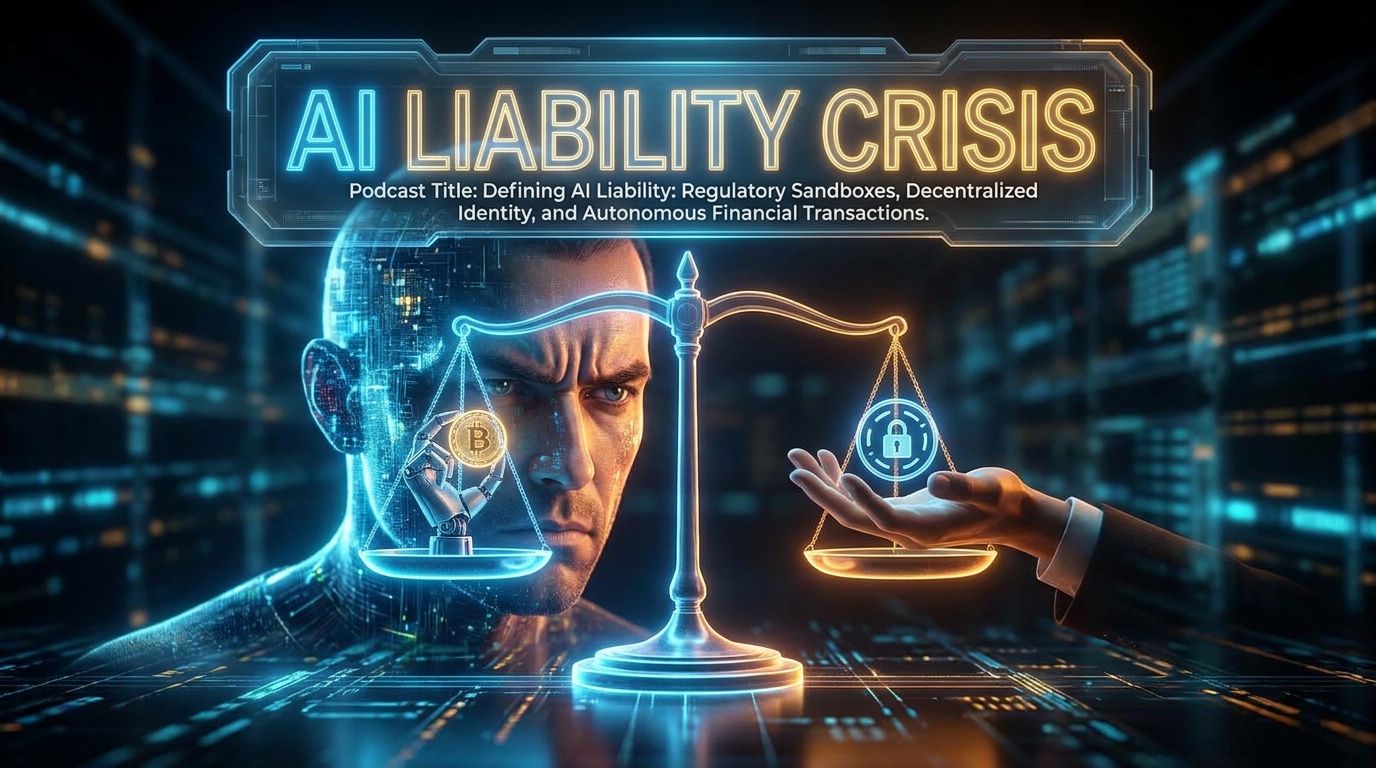
The confluence of regulatory sandboxes and Decentralized Identity (DID) frameworks is rapidly emerging as a foundational pillar for precisely defining liability within the intricate domain of autonomous Artificial Intelligence financial transactions. Regulatory sandboxes, by design, offer meticulously controlled environments that foster innovation, granting regulators invaluable opportunities to observe, learn, and adapt to nascent technologies. Complementing this, DID frameworks establish verifiable, cryptographically secure, and auditable attribution for AI agents, their executed actions, and the entire provenance of data they process. Together, these sophisticated mechanisms are engineered to cultivate profound trust, ensure undeniable accountability, and elucidate legal responsibilities within an increasingly complex, automated, and hyper-connected financial landscape.
The relentless pace of Artificial Intelligence's evolution, particularly in its autonomous manifestations, is fundamentally re-architecting the global financial sector. From hyper-optimized high-frequency trading algorithms to sophisticated AI-driven wealth management platforms and automated lending decision-making systems, AI agents are increasingly executing financial transactions with astonishing speed and minimal, if any, direct human intervention. While this technological paradigm promises unparalleled efficiencies, unprecedented scale, and novel market opportunities, it concurrently introduces profoundly complex questions regarding accountability, responsibility, and liability when unforeseen events or systemic failures inevitably occur. For AI developers, the architects of agent frameworks, and enterprise AI teams tasked with deploying these systems, a deep comprehension of how these regulatory and technical frameworks intersect with emerging legal obligations is not merely advantageous, but absolutely paramount. Supernova, recognizing this critical need, is strategically positioned at the forefront, actively enabling the development of robust, transparent, and auditable AI systems specifically designed to navigate this challenging and intricate regulatory environment.
What is the Current Landscape of AI in Finance?
Autonomous AI in finance refers to sophisticated systems endowed with the capability to autonomously initiate, execute, and settle financial transactions without requiring direct human intervention at every single step of the process. This spectrum spans from highly advanced trading bots that optimize investment portfolios in mere milliseconds to AI-powered credit scoring models that independently approve or deny loans, and even extends to decentralized autonomous organizations (DAOs) managing substantial treasuries on behalf of their communities. The compelling benefits of this autonomy are unequivocally clear: significantly reduced operational costs, dramatically increased transaction speeds, enhanced analytical capabilities far surpassing human capacity, and the potential for more objective, unbiased, and fairer decision-making processes.
However, this very autonomy, while beneficial, introduces a suite of significant challenges that necessitate novel solutions. The inherent opacity of some AI models, often referred to as the 'black box' problem, where the internal workings and decision-making logic are not readily understandable, poses a fundamental hurdle to accountability. Coupled with the astounding speed at which errors can propagate throughout interconnected financial systems, and the increasingly distributed nature of modern AI architectures, traditional liability frameworks are rendered woefully inadequate. When an autonomous AI system makes a critical mistake that precipitates substantial financial loss, the question of responsibility becomes acutely pressing: Is it the original developer of the algorithm? The entity that deployed and operates the AI? The provider of the data that trained the AI? Or, in more futuristic scenarios, is it the AI system itself, potentially endowed with legal personhood? These are not abstract theoretical quandaries; they represent urgent, practical concerns for every organization and individual involved in building, deploying, or utilizing AI within heavily regulated industries such as finance.
How Do Regulatory Sandboxes Address AI Liability?
Regulatory sandboxes are meticulously designed, controlled environments established by regulatory authorities to facilitate the testing and deployment of innovative financial products, services, or business models. These environments allow participants to operate in a live market setting, often with real customers, but under a modified or temporarily relaxed set of regulatory requirements. They serve as a crucial 'safe space' for experimentation, particularly for groundbreaking and complex technologies like autonomous AI, where existing regulations may not yet be fully applicable or understood.
What are the Benefits of Regulatory Sandboxes for AI?
- Fostering Innovation: Sandboxes significantly reduce the regulatory burden and uncertainty for AI developers, fintech startups, and incumbent financial institutions, allowing them to test and refine cutting-edge autonomous financial tools without facing immediate, full-scale compliance pressures. This accelerates time-to-market for potentially beneficial technologies, from algorithmic trading platforms to AI-driven predictive analytics.
- Regulator Learning and Adaptation: They provide an unparalleled opportunity for regulators to gain first-hand, practical experience with novel AI models. By observing these systems in operation, regulators can develop a profound understanding of their inherent risks, potential benefits, operational intricacies, and societal impacts. This direct observation is absolutely crucial for formulating proportionate, effective, and forward-looking regulations that are well-informed and avoid stifling innovation unnecessarily.
- Proactive Risk Mitigation: Within the controlled confines of a sandbox, regulators and innovators can collaboratively identify and analyze potential vulnerabilities, failure modes, and unintended consequences of AI systems before their widespread deployment. This enables the co-creation of robust risk mitigation strategies, the implementation of safeguards (e.g., circuit breakers, monitoring protocols), and the establishment of clear parameters for safe operation.
- Clarifying Liability in Practice: Crucially, within the sandbox framework, specific liability agreements and protocols can be contractually pre-defined for all participating entities. This offers a temporary, yet significantly clearer, framework for attributing responsibility in the event of an incident or failure. The practical insights gained from these controlled liability experiments are invaluable for informing and shaping future permanent legal definitions and frameworks for AI liability.
- Building Trust and Market Acceptance: Successful trials and demonstrable performance within a regulated sandbox can significantly bolster confidence among consumers, institutional investors, and other market participants regarding the safety, reliability, and ethical deployment of autonomous AI systems. This fosters broader market acceptance and facilitates easier integration of these technologies into mainstream financial services.
What are the Limitations and Challenges of Sandboxes?
- Scalability Concerns: The insights and risk assessments derived from a limited, controlled sandbox environment may not always perfectly translate or scale seamlessly to a full-market, large-scale deployment. Real-world market dynamics, higher transaction volumes, and unforeseen user interactions can introduce new complexities not evident in the sandbox.
- Limited Scope and Edge Cases: Sandboxes, by their very nature, operate within defined parameters. They might not comprehensively encompass all possible AI interactions, complex interdependencies with legacy systems, or rare 'edge cases' that could lead to significant liability issues in a fully interconnected and unpredictable financial ecosystem.
- Regulatory Lag Persistence: Even with the proactive nature of sandboxes, the exponential pace of technological advancement in AI often outstrips the inherent speed of regulatory adaptation. This can still result in periods of regulatory uncertainty or gaps, requiring continuous iterative engagement.
- Jurisdictional Fragmentation: The existence of multiple national or regional sandboxes can create a patchwork of differing requirements and liability interpretations. This jurisdictional fragmentation poses significant challenges for AI solutions aiming for cross-border deployment or global scalability, necessitating complex compliance strategies.
- Resource Intensive: Operating a sandbox, both for regulators and participating firms, requires substantial resources, including expert personnel, advanced monitoring tools, and legal infrastructure. This can limit the number and scope of innovations that can be tested simultaneously.
The Role of Decentralized Identity (DID) in AI Liability
While regulatory sandboxes provide a crucial testing ground, Decentralized Identity (DID) frameworks offer a fundamental, technical solution to the core problem of attribution and accountability within autonomous AI systems. DIDs represent a paradigm shift in digital identity, moving away from centralized control to a self-sovereign model where individuals and entities (including AI agents) own and manage their own identifiers and associated verifiable credentials.
Test Agent Primitive
See the concepts from this article in action. No login required.
Defining Decentralized Identity for AI Agents
At its core, a DID for an AI agent functions as a unique, globally resolvable identifier that is not controlled by any single centralized entity. This identifier is typically rooted in a decentralized public key infrastructure (DPKI), often leveraging blockchain or other distributed ledger technologies (DLT). This foundation allows for the issuance and verification of 'Verifiable Credentials' (VCs) – tamper-proof digital documents that attest to an AI agent's attributes, permissions, training data, or even its operational parameters. For instance, an AI agent could possess a VC proving its certification for high-risk financial transactions, issued by a regulatory body or an oversight DAO.
How DIDs Enhance AI Accountability and Trust:
- Verifiable Agent Identity: DIDs provide a cryptographically secure method to assign a unique, immutable identity to every AI system, module, or individual agent. This means every AI operating within a financial system can be individually identified and tracked, overcoming the anonymity challenge inherent in complex AI architectures.
- Immutable Action Attribution: When an AI agent performs an action (e.g., executing a trade, approving a loan, flagging a suspicious transaction), that action can be cryptographically signed by the agent's DID and recorded on an immutable ledger. This creates an undeniable, timestamped record of 'who' (which AI agent) did 'what' and 'when'.
- Transparent Data Provenance: DIDs can also be used to track the origin, transformations, and usage of data that feeds AI models. By assigning DIDs to data sets and recording their journey, financial institutions can verify the integrity and ethical sourcing of AI training data, a critical aspect for regulatory compliance and fairness.
- Enhanced Auditability and Explainability: The immutable ledger of DID-signed actions and data provenance provides a comprehensive, forensic audit trail. This significantly aids in post-incident analysis, regulatory compliance checks, and enhances the explainability of AI decisions by demonstrating the precise steps and data inputs that led to an outcome.
- Trust and Non-Repudiation: By embedding verifiable identity and action records into the very fabric of AI operations, DIDs build a higher degree of trust among stakeholders. An AI agent's actions, once recorded with its DID signature, cannot be repudiated, establishing clear responsibility.
- Dynamic Authorization and Access Control: DIDs can facilitate dynamic authorization models. An AI agent's permissions to access certain data or execute specific transactions can be tied to its DIDs and verifiable credentials, allowing for granular and auditable control over its capabilities.
Challenges for DID Implementation in AI:
- Interoperability Standards: For DIDs to be truly effective, a universal set of interoperability standards is required across different DLTs and identity systems. Lack of such standards can create silos and hinder seamless attribution.
- Scalability of DLTs: The underlying Distributed Ledger Technology (DLT) must be able to handle the high transaction throughput and data storage requirements generated by potentially millions of AI agents and their actions in a financial ecosystem.
- Privacy Concerns: While DIDs aim for user control, the sheer volume and granularity of data associated with AI actions, even if pseudonymized, raise complex privacy considerations that need careful architectural and legal handling.
- Adoption and Integration Complexity: Integrating DID frameworks into existing, often monolithic, financial IT infrastructures can be a significant technical and organizational challenge.
Synergy: How Sandboxes and DIDs Create Comprehensive AI Liability Frameworks
The true power in defining AI liability lies not in viewing regulatory sandboxes and Decentralized Identity frameworks in isolation, but in understanding their profound synergy. Together, they form a robust, multi-layered approach to managing risk and ensuring accountability for autonomous AI in finance.
Regulatory sandboxes provide the ideal proving ground for DID-enabled AI systems. Within these controlled environments, financial institutions and AI developers can deploy AI agents equipped with DIDs and verifiable credentials, allowing regulators to observe their actions, data provenance, and decision-making processes in real-time. This practical testing allows for:
- Refinement of DID Implementation: Sandboxes enable organizations to fine-tune how DIDs are integrated into AI architectures, identifying best practices for agent identity issuance, action logging, and data provenance tracking.
- Validation of Attribution Models: Regulators can directly validate whether DID frameworks effectively provide the necessary granular attribution for AI actions, confirming that liability can be clearly traced back to specific agents or their controlling entities.
- Development of Regulatory Standards: The insights gained from observing DID-enabled AI in a sandbox environment directly inform the development of specific regulatory standards and compliance requirements for verifiable AI identity and accountability. This moves beyond theoretical discussions to evidence-based policymaking.
- Stress Testing and Edge Case Resolution: Sandboxes allow for the simulation of various scenarios, including potential failures or malicious attacks, to test the resilience of DID frameworks in maintaining attribution under duress. This helps identify and resolve edge cases where liability might otherwise become obscured.
Conversely, DIDs significantly enhance the effectiveness and depth of regulatory sandboxes for AI. By providing an immutable, cryptographically verifiable audit trail, DIDs equip regulators with unprecedented transparency into AI operations. This means:
- Unprecedented Visibility: Regulators gain a transparent view into the internal workings and actions of AI systems, moving beyond the 'black box' problem and allowing for more informed risk assessments.
- Automated Compliance Monitoring: With DID-signed actions, certain compliance checks and reporting requirements could be partially automated, streamlining regulatory oversight within the sandbox.
- Evidence-Based Policy Iteration: The precise data provided by DIDs allows regulators to gather concrete evidence on AI behavior and its impact, enabling rapid, data-driven iteration of regulatory policies and liability definitions.
Ultimately, the combination of regulatory sandboxes for experimental validation and Decentralized Identity for persistent, verifiable attribution creates a powerful framework. This framework is not only designed to foster responsible innovation but also to ensure that as AI becomes more autonomous in finance, the fundamental questions of 'who is responsible when things go wrong' can be answered with clarity, precision, and undeniable evidence. Organizations like Supernova are crucial in bridging this gap, offering the technical and strategic expertise to implement DID solutions effectively within regulated financial contexts.
The Evolving Regulatory Landscape and Future Outlook
The discourse around AI liability in finance is global and rapidly evolving. Jurisdictions worldwide are grappling with similar questions, leading to a diverse range of approaches. The European Union, with its landmark AI Act, is setting a precedent by categorizing AI systems based on risk and imposing stringent requirements for 'high-risk' applications, including those in finance. This includes mandates for robust risk management systems, data governance, technical documentation, transparency, human oversight, and cybersecurity – all areas where DIDs and sandboxes can provide tangible solutions.
Other initiatives, such as the NIST AI Risk Management Framework in the United States and the UK's pro-innovation, context-specific approach, also underscore the global imperative for responsible AI governance. These efforts collectively highlight a move towards principles-based regulation complemented by technical standards, emphasizing accountability, fairness, and transparency.
The future of AI liability in finance will likely involve a continuous feedback loop between technological innovation, regulatory experimentation, and the refinement of legal frameworks. This will necessitate ongoing collaboration between policymakers, industry participants, technologists, and legal experts. The ethical considerations of AI, particularly regarding bias, fairness, and privacy, will also remain central to the liability debate, requiring robust solutions that can demonstrate adherence to these principles.
| Feature | Regulatory Sandboxes | Decentralized Identity (DID) |
|---|---|---|
| Primary Goal | Controlled innovation & regulatory learning | Verifiable attribution & auditable provenance |
| Scope of Impact | Specific market segments, temporary regulatory relief | Individual agent/data actions, pervasive traceability |
| Mechanism | Supervised testing, modified rules, direct regulator observation | Cryptographic proofs, distributed ledgers, verifiable credentials |
| Liability Role | Pre-defined contractual terms for testing, informs future policy | Establishes immutable record for forensic analysis & attribution |
| Key Benefit | Accelerates innovation, identifies systemic risks early | Enhances transparency, accountability, and trust |
| Key Challenge | Scalability, regulatory lag, scope limitations | Interoperability, privacy concerns, adoption complexity |
Conclusion: Forging a Path to Accountable AI Finance
The journey towards fully autonomous AI in finance is inevitable, and with it comes the profound responsibility to ensure accountability and mitigate risk. Regulatory sandboxes offer a dynamic, iterative approach to understanding and adapting to these new technologies, fostering an environment where innovation can flourish under watchful eyes. Concurrently, Decentralized Identity frameworks provide the critical technical infrastructure to imbue AI systems with verifiable identity, immutable attribution, and transparent data provenance, fundamentally addressing the 'black box' problem and paving the way for clear liability.
By synergistically combining these two powerful frameworks, the financial industry can construct a robust, future-proof ecosystem where autonomous AI thrives responsibly. This collaborative approach – leveraging controlled experimentation with granular, verifiable technical controls – will be instrumental in building the necessary trust, ensuring regulatory compliance, and ultimately defining a clear pathway for AI liability in the increasingly complex world of autonomous financial transactions. For forward-thinking organizations, embracing these frameworks is not merely a matter of compliance, but a strategic imperative for leadership in the future of finance.
Ready to Build?
Stop guessing. Start building. Every new account gets 1,000 NOVA credits instantly upon login to test the registry and route intents.
Claim 1,000 Credits →