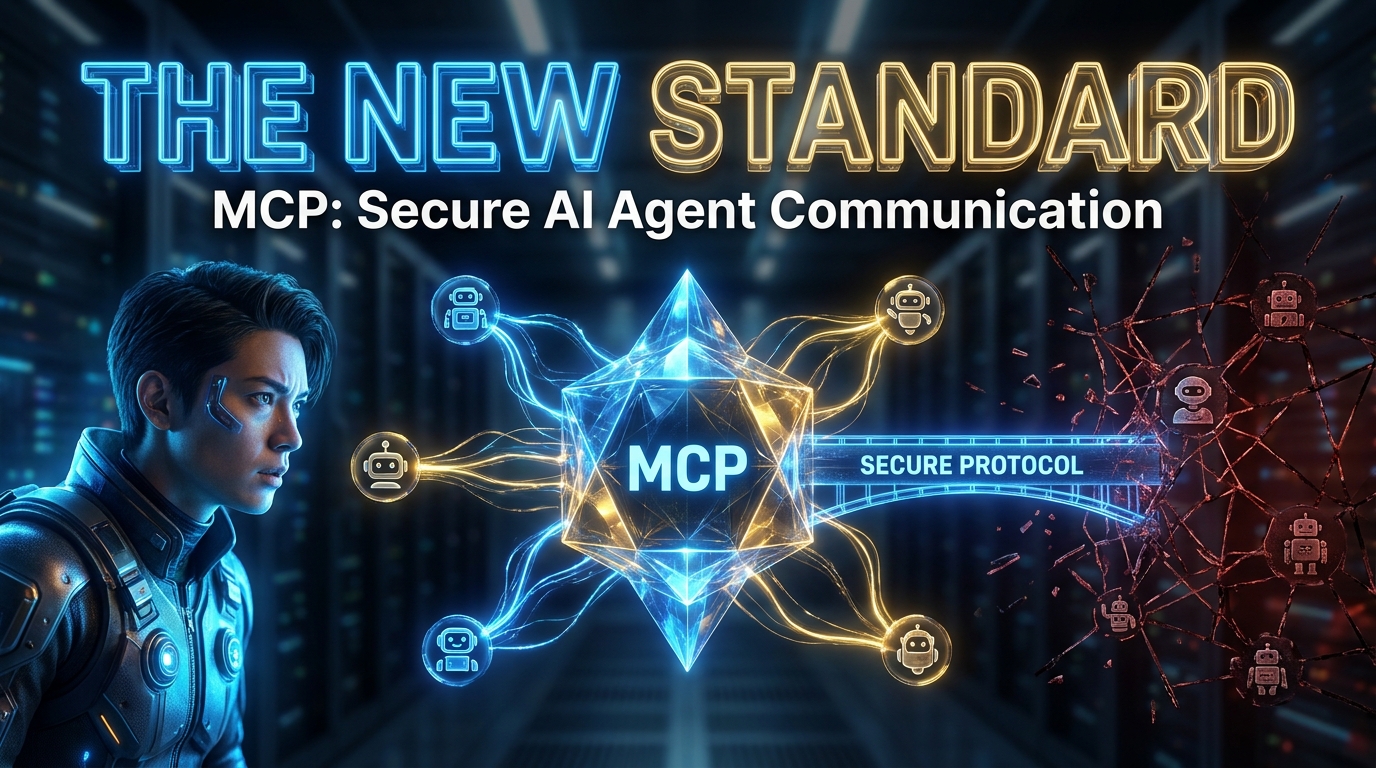
The Model Context Protocol (MCP) is rapidly solidifying its position as the indispensable standard for secure, profoundly interoperable communication among autonomous AI agents. It introduces a meticulously structured, cryptographically secured framework designed for agents to exchange not just data, but rich contextual information, explicit intentions, and verifiable capabilities. This foundational protocol directly confronts the pervasive issues of fragmentation and trust deficits that have historically plagued multi-agent systems. Supernova, at the forefront of this technological shift, is pioneering MCP adoption, thereby empowering developers and enterprises to architect robust, collaborative AI ecosystems that are poised to redefine the very essence of autonomous intelligence.
The dawn of autonomous AI agents heralds a transformative revolution across virtually every industry vertical, from the precision of personalized healthcare to the agility of automated finance and the intricate efficiency of intelligent manufacturing. These agents, engineered to operate independently and pursue complex objectives, possess the inherent potential to unlock unprecedented levels of operational efficiency, foster groundbreaking innovation, and deliver novel services. However, the full realization of this immense potential is contingent upon their ability to communicate effectively, securely, and contextually with one another, irrespective of their underlying models, development frameworks, or originating creators. This pressing, critical need has given rise to the Model Context Protocol (MCP) – representing nothing short of a foundational paradigm shift in how autonomous AI agents interact and collaborate.
Contemporary multi-agent systems frequently grapple with severe limitations, including systemic fragmentation, reliance on disparate and often proprietary communication methodologies, and significant, exploitable security vulnerabilities. Agents struggle to accurately discern each other's true intentions, to share genuinely relevant context without misinterpretation, and to operate within a provable, verifiable chain of trust. Supernova recognizes with absolute clarity that for autonomous AI to truly flourish and scale, a universal communication language and an unassailable, secure handshake mechanism are not merely beneficial but are utterly indispensable. The Model Context Protocol stands as Supernova's definitive answer: a robust, universally standardized framework meticulously engineered to foster a truly interoperable, secure, and ultimately trustworthy autonomous AI landscape.
Understanding the Model Context Protocol (MCP)
The Model Context Protocol (MCP) is an ingeniously designed, standardized, and open protocol fundamentally purposed to facilitate secure, rich, and verifiably authentic communication between autonomous AI agents. At its very core, MCP defines an advanced, structured methodology that allows agents to exchange not merely raw data streams or simple commands, but also their intricate operational context, inferred or declared intentions, specific functional capabilities, and critically, the full provenance and lineage of information. It represents a profound evolution beyond simplistic API calls or rudimentary message queues, empowering agents to construct a deeply shared understanding of their dynamic environment, collaborative tasks, and the complete history of their interactions.
MCP strategically addresses the intrinsic challenges inherent in heterogeneous agent systems by prescribing and enforcing a set of core principles and technical specifications:
- Standardized Context Schemas: MCP mandates the use of formal, universally recognized definitions for various categories of contextual information. These include, but are not limited to, environmental state parameters, task-specific configurations, granular agent identities, and historical action logs. These schemas leverage robust data serialization formats such as JSON Schema or Protobuf. This rigorous standardization ensures that when one agent communicates 'location data,' every other MCP-compliant agent interprets that data precisely and unambiguously as intended, eliminating semantic ambiguity.
- Cryptographic Security Layers: The protocol integrates built-in, uncompromisable mechanisms for agent identity verification, comprehensive message integrity, and absolute confidentiality. This is achieved through the sophisticated application of digital signatures for authentication and non-repudiation, and robust encryption protocols. This architectural design guarantees that all communications are authentic, have not been tampered with in transit, and are accessible exclusively to authorized participants within the multi-agent ecosystem.
- Intention & Capability Manifests: MCP enables agents to declaratively publish their overarching goals, specific objectives, and the precise functions or services they are capable of performing. This transparent declaration, often structured via semantic web technologies or formal ontologies, allows other agents to intelligently discover, evaluate, and purposefully engage with their peers based on declared competencies and potential for collaboration.
- Verifiable Provenance & Trust Chains: A distinguishing feature of MCP is its ability to establish and maintain a verifiable chain of custody for all exchanged information and actions. This means that agents can ascertain the origin, integrity, and credibility of any piece of shared context or data, fostering a high degree of trust and accountability within the system.
Fundamentally, unlike traditional client-server architectures or basic publish-subscribe models, MCP imbues all communications with profound semantic meaning and intrinsic, verifiable trust. This advanced capability allows a banking agent developed by one financial institution to securely and accurately collaborate with a regulatory compliance agent from an entirely different firm. They can understand not just the raw transactional data, but crucially, the underlying context and the 'why' behind each transaction, enabling a new level of intelligent and trustworthy automated operations.
Test Agent Primitive
See the concepts from this article in action. No login required.
Why MCP is Crucial for the Future of Autonomous AI
The accelerating proliferation of diverse AI models and agent frameworks underscores an urgent necessity for a common, universally accepted ground for interaction. MCP is not merely an incremental improvement; it is a foundational, non-negotiable requirement for the successful deployment and scalable evolution of the next generation of AI systems.
Addressing Interoperability Challenges: A Universal Language for AI
Interoperability remains one of the most formidable hurdles in the design, development, and deployment of complex multi-agent systems. Disparate AI models, often built with vastly varying architectures, proprietary data formats, and incompatible communication paradigms, inherently struggle to converse meaningfully, leading to isolated and inefficient silos of intelligence. MCP decisively resolves this by functioning as a universal translator and a sophisticated negotiator within the AI landscape. By establishing and enforcing common schemas for context, intention, and capability, agents can achieve unprecedented levels of seamless interaction:
- Speaking a Common Language: The adoption of standardized context objects ensures that a critical message such as 'anomaly detected' from a specialized cybersecurity agent is understood consistently and unambiguously by an incident response agent, regardless of their internal implementation details, programming language, or underlying machine learning models.
- Intelligent Discovery and Dynamic Collaboration: Agents can broadcast their specific capabilities and precisely parse the capabilities of others using a standardized manifest format. This facilitates dynamic discovery of suitable partners, enabling the formation of spontaneous, goal-oriented collaborations that were previously impossible or required extensive manual integration.
- Bridging Heterogeneous Systems: MCP provides the necessary abstraction layer that allows agents built on entirely different frameworks (e.g., a TensorFlow-based agent interacting with a PyTorch-based agent, or a cloud-native agent communicating with an edge device agent) to communicate effectively, sharing context and collaborating towards common objectives without needing deep, custom integrations.
Enhancing Security and Trust: The Foundation of Reliable Autonomy
In a world increasingly reliant on autonomous systems, trust and security are paramount. Malicious actors or system failures can have catastrophic consequences. MCP is engineered with security as a core, rather than an afterthought, intrinsically building trust into every layer of agent interaction:
- Preventing Malicious Agents and Impersonation: Through robust cryptographic identity verification, MCP ensures that only authenticated and authorized agents can participate in communications. This effectively prevents impersonation attacks and secures the system against malicious agents attempting to infiltrate or disrupt operations.
- Guarding Data Integrity and Confidentiality: The protocol employs state-of-the-art encryption to protect message content, guaranteeing confidentiality and preventing unauthorized access. Digital signatures verify message integrity, ensuring that data exchanged has not been altered or tampered with since it was sent by the originating agent.
- Ensuring Auditability and Accountability: Every communication, action, and shared context within an MCP-enabled system carries a verifiable digital footprint. This creates an undeniable audit trail, making it possible to trace the provenance of information, identify the agents involved in any transaction, and establish clear accountability for actions taken, which is vital for debugging, compliance, and regulatory oversight.
Fostering Scalability and Efficiency: Unleashing Collaborative Potential
The ability of autonomous AI systems to scale horizontally and operate with peak efficiency is critical for widespread adoption. MCP significantly contributes to both:
- Reduced Development Overhead: By providing a standardized communication framework, MCP drastically reduces the need for developers to create bespoke integration solutions for every pair of interacting agents. This accelerates development cycles, reduces costs, and allows engineers to focus on agent intelligence rather than communication plumbing.
- Optimized Resource Allocation: With clear intention and capability manifests, agents can intelligently discover and select the most appropriate partners for specific tasks. This leads to more efficient resource utilization, as tasks are routed to agents best equipped to handle them, minimizing redundant efforts and maximizing system throughput.
- Dynamic System Adaptability: MCP-enabled systems can dynamically adapt to changing environments and new requirements. New agents can be seamlessly integrated, and existing agents can update their capabilities or intentions, with the entire ecosystem able to adapt and reconfigure without extensive manual intervention, fostering true resilience.
Enabling Ethical AI Development: Building Responsible Autonomy
The ethical implications of autonomous AI are profound. MCP provides fundamental mechanisms to guide responsible development and deployment:
- Transparency in Interaction: By standardizing context and intention sharing, MCP inherently promotes greater transparency in how agents interact and make decisions. This clearer communication channel makes it easier for human operators and other agents to understand the reasoning and rationale behind autonomous actions.
- Enhanced Control and Oversight: The verifiable nature of MCP communications, combined with clear declarations of capabilities and intentions, provides human operators with stronger levers for oversight and control. It enables the setting of clear operational boundaries and allows for intervention points based on shared contextual understanding.
- Promoting Responsible Autonomy: By baking trust, verifiability, and semantic understanding into the core communication protocol, MCP creates a robust foundation for building truly responsible autonomous systems. It helps ensure that AI agents operate within defined ethical boundaries and contribute positively to society.
MCP in Action: Transformative Use Cases
The applications of MCP span across numerous industries, catalyzing innovation and efficiency:
- Healthcare: Autonomous agents could securely collaborate to analyze patient data from various sources (wearables, EHRs, diagnostic labs), recommend personalized treatment plans, and coordinate logistics for medicine delivery, all while maintaining strict privacy and data integrity through MCP.
- Finance: Financial agents can perform real-time fraud detection by securely sharing contextual transaction data with risk assessment agents, instantly flagging anomalies and coordinating automated responses. Regulatory compliance agents can monitor transactions and report deviations, ensuring adherence to complex financial laws.
- Manufacturing & Logistics: In smart factories, robotic agents can communicate their status, sensor readings, and task progress using MCP, enabling dynamic task allocation, predictive maintenance, and seamless coordination across the production line and supply chain.
- Smart Cities: Traffic management agents, environmental monitoring agents, and public safety agents can securely exchange real-time contextual information to optimize city operations, respond to emergencies, and improve urban living quality, all powered by trusted inter-agent communication.
MCP vs. Traditional Communication Methods: A Comparative Overview
To further illustrate the distinct advantages of the Model Context Protocol, the following table highlights key differences when compared to conventional communication paradigms:
| Feature | Traditional APIs/Message Queues | Model Context Protocol (MCP) |
|---|---|---|
| Communication Type | Raw data exchange, simple commands | Rich contextual information, intentions, capabilities, verified data provenance |
| Interoperability | Limited; requires custom integration for disparate systems | High; enabled by standardized schemas and open protocol design |
| Security Mechanism | External layers (e.g., TLS, VPN, application-level security) | Built-in cryptographic layers (identity verification, encryption, integrity checks) |
| Trust & Provenance | Manual or application-level assurance; difficult to verify origin | Intrinsic; verifiable agent identities, message origins, and action history |
| Semantic Understanding | Low; relies on external documentation or shared interpretation | High; fostered by standardized context schemas and intention manifests |
| Agent Discovery | Manual configuration, centralized directories, or basic registration | Decentralized; agents publish capabilities for intelligent peer discovery |
| Complexity for Multi-Agent Systems | Increases exponentially with number of agents and heterogeneity | Managed and reduced through standardization and intrinsic mechanisms |
Supernova's Leadership in MCP Adoption
Supernova is not merely observing this paradigm shift; we are actively leading its charge. Our commitment to the Model Context Protocol stems from a deep understanding that its widespread adoption is crucial for unlocking the true, transformative potential of autonomous AI. We are dedicated to providing the tools, platforms, and expertise necessary for developers and enterprises to seamlessly integrate MCP into their AI strategies.
By championing MCP, Supernova empowers organizations to build truly robust, secure, and collaborative AI ecosystems. We believe that a standardized, secure communication backbone is the key to accelerating innovation, ensuring ethical deployment, and realizing a future where autonomous agents work together flawlessly to solve humanity's most complex challenges. Join us in embracing MCP as the new standard for secure, interoperable autonomous AI agent communication, and together, let's build the future of intelligent systems.
The Path Forward: A Collaborative Ecosystem
The success of MCP, like any open standard, hinges on widespread collaboration and community engagement. Supernova is actively fostering an ecosystem where researchers, developers, and industry leaders can contribute to the evolution of the protocol, share best practices, and develop compatible tools and frameworks. This collaborative approach ensures that MCP remains adaptable, future-proof, and universally beneficial. By embracing an open, community-driven development model, we aim to establish MCP as the undisputed foundation for a decentralized, intelligent future where AI agents can operate with unprecedented levels of trust and efficiency.
Ready to Build?
Stop guessing. Start building. Every new account gets 1,000 NOVA credits instantly upon login to test the registry and route intents.
Claim 1,000 Credits →