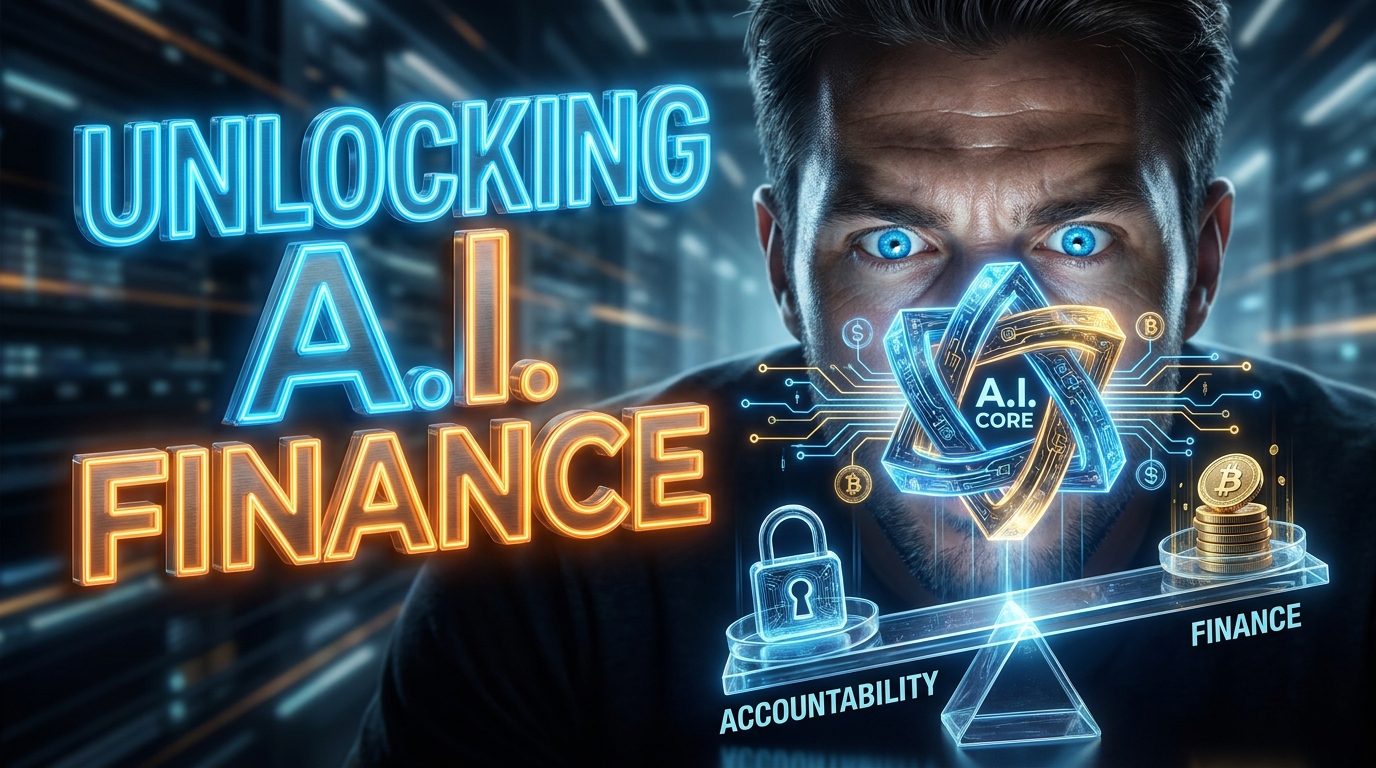
The enforcement of financial accountability in AI-to-AI programmable finance relies on a robust synergy of critical infrastructure components: Decentralized Identity (DID), Confidential Compute, Distributed Ledger Technologies (DLT), and resilient Oracle Networks. These elements collectively establish verifiable, auditable, and private transaction frameworks, ensuring that autonomous AI agents operate with integrity, transparency, and trust within increasingly complex and dynamic financial ecosystems.
The advent of AI-to-AI programmable finance marks a profound and irreversible shift in how economic value is exchanged, managed, and created. As autonomous AI agents gain increasing agency in transacting, negotiating, and executing sophisticated financial operations, the imperative for robust and provable financial accountability mechanisms becomes not merely important, but absolutely paramount. This paradigm shift transcends the traditional focus on preventing fraud; it extends to establishing verifiable trust, ensuring absolute transactional integrity, maintaining stringent data privacy standards, and enabling comprehensive auditability in an economy where machines are the primary drivers of financial activity. Without the deliberate and strategic implementation of these foundational components, the transformative promise of programmable finance risks devolving into an opaque, high-risk landscape fraught with potential for systemic instability and erosion of trust.
Why is Financial Accountability Critical in AI-to-AI Programmable Finance?
The traditional paradigms of financial oversight, painstakingly built over centuries on human intermediaries, centralized institutions, and regulatory bodies designed for human-speed interactions, are demonstrably ill-equipped for the unprecedented velocity, inherent complexity, and profound autonomy characteristic of AI-to-AI financial interactions. Autonomous agents operate at computational speeds and scales far beyond human cognitive capacity, rendering real-time human verification and manual enforcement impractical, if not impossible. Consequently, automated and cryptographically secured enforcement mechanisms become not just desirable, but absolutely essential. The core challenges that necessitate this fundamental re-architecture of financial accountability include:
- Attribution and Identity: In a world of ubiquitous AI agents, how can we definitively and cryptographically ascertain which specific AI agent initiated a particular transaction, under whose explicit authority it operated, and what its provenance or certifications are? Establishing an immutable and verifiable identity for each participating AI agent is foundational to assigning responsibility and ensuring compliance.
- Integrity of Execution: How can stakeholders be unequivocally certain that an AI agent executed a financial instruction precisely as programmed, without any deviation, manipulation, or unintended error? This challenge encompasses ensuring that algorithms operate as intended, that input data is untampered, and that output actions are accurate and consistent with their authorized parameters.
- Privacy of Data: Sensitive financial data, proprietary intellectual property, and strategic market intelligence are critical assets. How can such information be robustly protected from unauthorized access, leakage, or misuse during highly interconnected AI-to-AI interactions, while simultaneously allowing for the necessary levels of verification and auditability required for regulatory compliance and trust?
- Auditability and Dispute Resolution: In a fully autonomous, high-speed system, the ability to reconstruct a precise, immutable, and cryptographically verifiable timeline of events is non-negotiable. How can we ensure comprehensive audit trails that support regulatory compliance, internal reconciliation, and effective dispute resolution processes, especially when human intervention is minimal or absent?
- Systemic Risk: Unaccountable or malfunctioning AI agents pose a significant threat. They possess the potential to rapidly propagate errors, introduce severe financial instability, or even execute malicious actions at machine speed, thereby creating cascading failures throughout highly interconnected global financial networks. Mitigating this risk requires proactive, infrastructure-level solutions.
Addressing these profound challenges demands a complete paradigm shift, moving beyond incremental improvements to existing systems. It necessitates the development and adoption of foundational infrastructure that is inherently designed for trust, transparency, control, and verifiable accountability within a decentralized, AI-driven global economy. This is precisely where the powerful confluence of Decentralized Identity, Confidential Compute, Distributed Ledger Technologies, and Oracle Networks becomes not just advantageous, but absolutely indispensable.
Supernova's Perspective: The Foundation of Autonomous Trust
At Supernova, we profoundly recognize that the flourishing future of programmable finance hinges entirely on building trusted, auditable, and resilient AI ecosystems from the ground up. Our strategic approach involves the deep integration of these advanced cryptographic and distributed systems to empower AI developers and enterprise AI teams. This enables them to architect and deploy AI agents that are not only supremely intelligent and performant but are also inherently financially accountable and secure by design. We are dedicated to providing the essential underlying scaffolding upon which verifiably trusted, agent-driven economies can not only emerge but truly flourish, unlocking unprecedented levels of efficiency and innovation.
The Core Pillars of AI Financial Accountability Infrastructure
1. Decentralized Identity (DID) and Verifiable Credentials (VCs): The AI's Digital Passport
Decentralized Identity (DID) provides a revolutionary, machine-readable, verifiable, and self-sovereign method for AI agents to authenticate themselves and establish trust without relying on fragile, centralized authorities. This represents a radical and necessary departure from traditional, siloed identity models and is absolutely critical for establishing robust AI accountability.
Decentralized Identifiers (DIDs) are globally unique, cryptographically secured identifiers that do not require a centralized registry or a single point of control for their issuance or resolution. Crucially, they are managed directly by the entity they identify – in this context, an autonomous AI agent or a collective of agents. Verifiable Credentials (VCs) are tamper-evident digital attestations that are cryptographically signed by an issuer (e.g., a regulatory body, an enterprise, or another trusted AI system) and are securely held by a holder (the AI agent itself). When an AI agent needs to prove a certain attribute or qualification – such as its authorization level, the specific amount of funds it is permitted to control, its certified compliance status, or its verified origin – it presents a VC to a verifier. This process ensures:
- Self-Sovereignty and Autonomy: AI agents maintain direct control over their own identifiers and credentials, dramatically reducing their reliance on single points of failure, vulnerable central gatekeepers, or third-party identity providers. This architectural choice inherently enhances resilience and prevents censorship or unauthorized revocation.
- Cryptographic Proof and Immutability: VCs leverage state-of-the-art cryptography to guarantee their authenticity, integrity, and immutability. An AI agent can cryptographically prove that a credential was legitimately issued by a trusted entity and has not been tampered with, providing a high degree of assurance to any verifier.
- Granular Authorization: DIDs and VCs enable incredibly granular control over what information is revealed and to whom. An AI agent can selectively disclose only the necessary attributes for a specific transaction or interaction, adhering to the principle of "minimum necessary disclosure" and enhancing privacy. For example, an AI agent might prove it's authorized to trade up to $X without revealing its total asset holdings.
- Attribution and Traceability: By linking specific DIDs to financial transactions recorded on a DLT, every action performed by an AI agent can be irrevocably attributed back to its unique identifier. This creates an unalterable audit trail that is crucial for post-transaction analysis, compliance reporting, and dispute resolution.
- Reputation Systems: Over time, DIDs can accumulate a verifiable history of an AI agent's performance, compliance, and successful transactions. This forms the basis for reputation systems, allowing other AI agents or human stakeholders to assess trustworthiness and make informed decisions about engaging in financial interactions.
2. Confidential Compute: Protecting Data in Use
While DLTs provide integrity for data at rest and in transit, and DIDs secure agent identity, a critical vulnerability remains: the protection of data and computation while it is actively being processed or "in use." This is where Confidential Compute (CC) becomes indispensable. Confidential Compute is a cloud computing technology that isolates sensitive data within a hardware-protected, encrypted environment during processing, even from the cloud provider itself.
Test Agent Primitive
See the concepts from this article in action. No login required.
Technologies underlying Confidential Compute, such as Trusted Execution Environments (TEEs) – like Intel SGX, AMD SEV, or ARM TrustZone – create secure enclaves within a processor. These enclaves are cryptographically isolated from the rest of the system, meaning that even if the operating system, hypervisor, or other software components are compromised, the data and code inside the TEE remain protected. This addresses several key challenges in AI-to-AI programmable finance:
- Data Privacy during Execution: AI agents often handle highly sensitive financial algorithms, proprietary trading strategies, or private user data. Confidential Compute ensures that this information remains encrypted and inaccessible even while the AI agent is actively performing computations or executing strategies. This is vital for maintaining competitive advantage and regulatory compliance (e.g., GDPR, CCPA).
- Integrity of Computation: By securing the execution environment, CC guarantees that an AI agent's algorithms run exactly as intended, without external interference or tampering. This provides strong assurance against malicious injection of code, side-channel attacks, or unauthorized alterations to the AI's financial logic. It ensures "integrity of execution."
- Verifiable Outputs: Coupled with Zero-Knowledge Proofs (ZKPs), Confidential Compute can allow an AI agent to prove that it performed a computation correctly and within certain parameters, without revealing the underlying sensitive inputs or the internal logic of its algorithm. For instance, an AI agent could prove it executed a trade based on a complex proprietary model, and that the trade adhered to specified risk limits, without exposing the model itself.
- Protection of Intellectual Property: For financial institutions developing sophisticated AI models, CC protects these valuable intellectual assets from being reverse-engineered or stolen during their operational deployment, even in shared or public cloud environments.
The integration of Confidential Compute is essential for building private, secure, and verifiable execution environments for AI agents, thereby fostering greater trust and enabling the handling of highly sensitive financial operations.
3. Distributed Ledger Technologies (DLT): The Immutable Financial Record
Distributed Ledger Technologies (DLTs), often exemplified by blockchain, form the foundational backbone for recording, verifying, and securing the financial transactions of autonomous AI agents. Their inherent properties make them uniquely suited for creating a transparent, auditable, and resilient financial infrastructure.
Key contributions of DLTs to AI financial accountability include:
- Immutability and Tamper-Proof Records: Once a transaction or event is recorded on a DLT, it is practically impossible to alter or delete. This immutability provides an unassailable audit trail for every financial action performed by an AI agent, ensuring that historical data remains accurate and verifiable. This is critical for compliance, dispute resolution, and regulatory oversight.
- Transparency (Selective): While DLTs offer transparency, this can be managed. Public blockchains provide full transparency for transactions, while permissioned or private DLTs can offer selective transparency, allowing only authorized parties to view specific data. This flexibility is crucial for financial markets where certain information must remain confidential, while other data requires broad visibility for trust.
- Automated Contract Enforcement (Smart Contracts): Smart contracts, self-executing agreements encoded on DLTs, allow AI agents to engage in complex financial agreements with predefined rules and automated execution. These contracts automatically enforce terms, transfer assets, or trigger events when conditions are met, eliminating the need for human intermediaries and reducing the risk of error or manipulation. This directly enhances the "integrity of execution" by ensuring that programmed instructions are followed precisely.
- Decentralized Consensus: DLTs rely on decentralized consensus mechanisms to validate and append new transactions to the ledger. This eliminates reliance on a single central authority, reducing points of failure and increasing the overall resilience and trustworthiness of the financial system. It ensures that no single entity can unilaterally alter transaction history or manipulate outcomes.
- Asset Tokenization: DLTs enable the tokenization of real-world and digital assets. This allows for fractional ownership, instant settlement, and programmable transfer of value, all governed by smart contracts and recorded on an immutable ledger. AI agents can then programmatically interact with these tokenized assets, opening up new possibilities for automated finance.
DLTs, therefore, provide the bedrock for a verifiable, trustless, and highly efficient financial system where AI agents can operate with unprecedented levels of integrity and auditability.
4. Oracle Networks: Bridging On-Chain and Off-Chain Realities
For AI agents operating within programmable finance to make informed and accountable decisions, they often require access to real-world data that exists outside the DLT environment. This could include market prices, interest rates, economic indicators, weather data for parametric insurance, or the outcome of real-world events. Oracle Networks serve as the crucial middleware, securely and reliably feeding this off-chain information onto the blockchain or DLT.
The role of robust Oracle Networks is multifaceted:
- Secure Data Provision: Oracles fetch, aggregate, and cryptographically verify external data, ensuring its accuracy and authenticity before it is consumed by smart contracts or AI agents on a DLT. Decentralized oracle networks (DONs) distribute this task among multiple independent nodes, mitigating single points of failure and increasing resistance to manipulation.
- Triggering Smart Contracts: AI agents can program smart contracts to react to specific real-world conditions reported by oracles. For example, an AI agent managing a supply chain finance contract might trigger a payment based on an oracle reporting the delivery of goods at a specific location and time. This links real-world events to on-chain financial execution.
- Enabling Complex Financial Products: Many sophisticated financial instruments (e.g., derivatives, insurance products, dynamic lending protocols) rely on external data feeds. Oracles enable AI agents to interact with and manage these products programmatically, expanding the scope of AI-to-AI programmable finance beyond simple asset transfers.
- Ensuring Accountability of External Data: The reliability of an AI agent's financial decision is only as good as the data it receives. Robust oracle networks are designed with mechanisms like reputation systems, staking, and cryptographic proofs (e.g., TLS Notarization) to ensure the integrity and timeliness of the data feed, making the oracle process itself accountable.
- Hybrid Smart Contracts: Oracles facilitate the creation of "hybrid smart contracts" which combine on-chain logic (DLT) with off-chain computation and data (Confidential Compute, Oracles). This allows AI agents to execute highly complex financial strategies that require both the security of a blockchain and the flexibility of off-chain data and computation.
Without secure and decentralized oracle networks, AI agents would be confined to making decisions solely based on on-chain data, severely limiting their utility and accountability in real-world financial contexts.
Synergy and Interoperability: The Accountability Framework in Action
Individually, each of these technologies offers significant advancements. However, their true power in enabling financial accountability for AI-to-AI programmable finance emerges from their seamless integration and synergistic operation. Consider a typical financial transaction orchestrated by an AI agent:
An AI agent, identified by its unique Decentralized Identifier (DID) and possessing various Verifiable Credentials (VCs) (e.g., authorization to trade up to X amount, regulatory compliance certifications), wishes to execute a trade based on real-time market data. It queries a decentralized Oracle Network to fetch the current price of an asset, which is then cryptographically verified for authenticity. The AI agent, using its proprietary trading algorithm, processes this data within a Confidential Compute environment, ensuring that its strategic logic and any sensitive input data remain private and tamper-proof during calculation. Once the optimal trade is identified and validated internally, the AI agent initiates a transaction on a Distributed Ledger Technology (DLT) via a smart contract. This smart contract, encoded with the terms of the trade and the AI's authorized parameters, automatically executes the transaction and immutably records it on the ledger, linked directly to the AI agent's DID. The entire process, from identification to data sourcing, computation, and final settlement, is verifiable, private, and auditable.
This integrated approach provides:
- Verifiable Attribution: Every action is linked to a unique, cryptographically verifiable AI agent identity.
- Assured Integrity: Computations are protected (Confidential Compute), contracts are self-enforcing (DLT), and data is verified (Oracles).
- Enhanced Privacy: Sensitive information is processed within secure enclaves while necessary proofs are shared.
- Comprehensive Auditability: An immutable, transparent ledger provides a complete record of all activities, accessible to authorized parties.
Challenges and Future Outlook
While the architectural blueprint for AI financial accountability is robust, challenges remain. Scalability of DLTs, the standardization of DID/VC protocols, the performance overhead of Confidential Compute, and the economic incentives for robust oracle networks are ongoing areas of research and development. Furthermore, aligning this rapidly evolving technological stack with existing and emerging regulatory frameworks (such as the EU AI Act) will be crucial for widespread adoption.
The future of AI-to-AI programmable finance is one of unprecedented efficiency, innovation, and interconnectedness. By meticulously building the core infrastructure around Decentralized Identity, Confidential Compute, Distributed Ledger Technologies, and Oracle Networks, we are laying the groundwork for a financial ecosystem where autonomous AI agents can operate with verifiable trust, accountability, and systemic integrity. This foundational work is not just about technology; it's about redefining trust in a machine-driven world.
| Component | Primary Function | Contribution to Accountability | Key Technologies/Concepts |
|---|---|---|---|
| Decentralized Identity (DID) | Self-sovereign, verifiable digital identities for AI agents. | Establishes immutable attribution and verifiable authorization. | DIDs, Verifiable Credentials (VCs), Zero-Knowledge Proofs (ZKPs) |
| Confidential Compute | Protects data and computation while in use. | Ensures privacy of sensitive algorithms/data and integrity of execution. | Trusted Execution Environments (TEEs), Homomorphic Encryption (HE) |
| Distributed Ledger Technologies (DLT) | Immutable, decentralized record-keeping for transactions. | Provides comprehensive auditability, tamper-proof records, and automated enforcement. | Blockchain, Smart Contracts, Consensus Mechanisms |
| Oracle Networks | Securely bridges off-chain data to on-chain environments. | Feeds verified real-world data for informed, context-aware AI decisions. | Decentralized Oracle Networks (DONs), Data Aggregation, Cryptographic Proofs |
Ready to Build?
Stop guessing. Start building. Every new account gets 1,000 NOVA credits instantly upon login to test the registry and route intents.
Claim 1,000 Credits →