Mastering Attributable Accountability: Zero-Trust and MCP for Autonomous AI in Regulated Finance
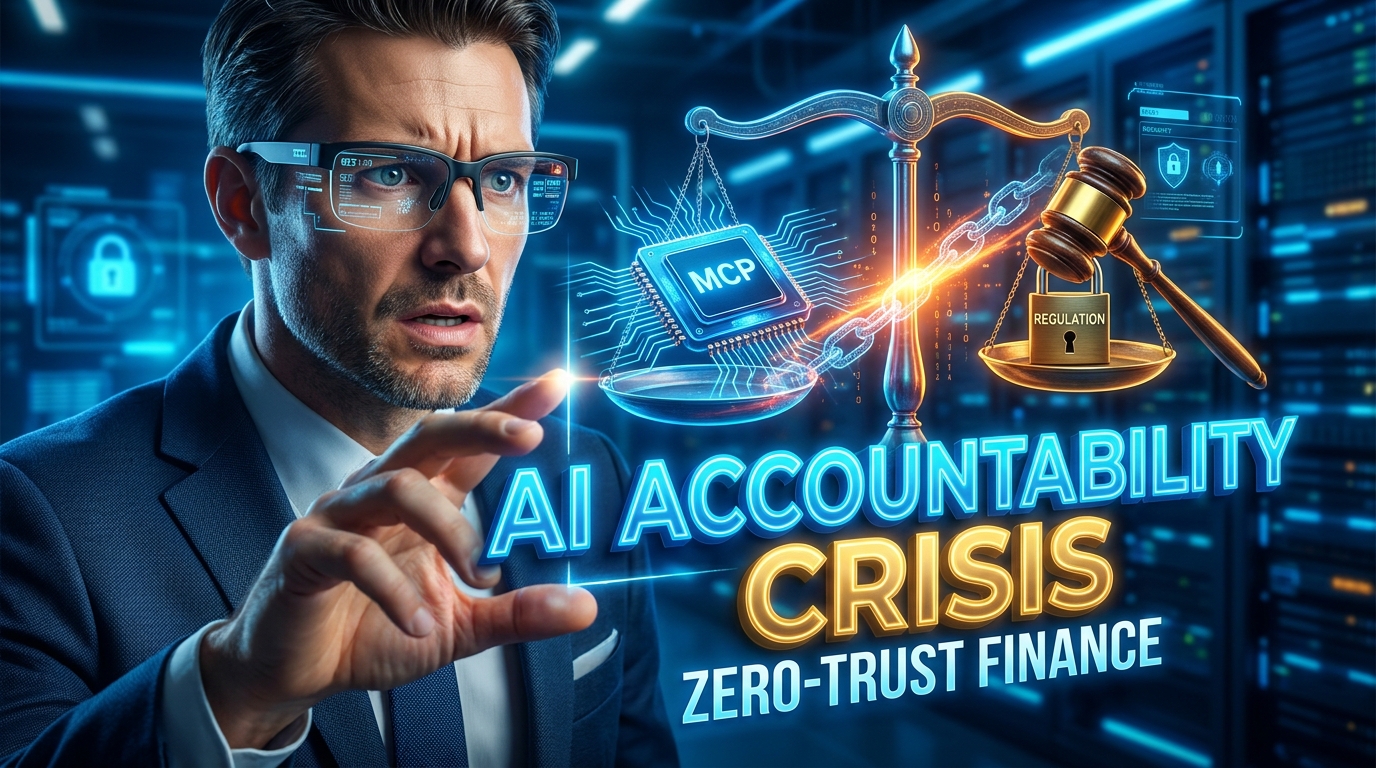
The financial services industry stands at the precipice of an AI revolution, where autonomous agents promise unprecedented efficiency, predictive power, and personalized services. However, this transformative potential is tethered to an equally monumental challenge: ensuring attributable accountability in an environment governed by stringent regulations and high-stakes decision-making. As AI agents gain autonomy, the 'black box' problem intensifies, making it difficult to trace decisions, explain outcomes, and assign responsibility. This is where Supernova steps in, pioneering a robust framework built upon Zero-Trust Architectures (ZTA) and Standardized Interoperability Protocols (MCP) to provide verifiable, auditable, and attributable accountability for autonomous AI agents.
For AI Developers, Agent Framework Developers, and Enterprise AI Teams, understanding this synergy is not merely an advantage—it's a prerequisite for deploying AI at scale in regulated financial ecosystems. The imperative is clear: build AI systems that are not only intelligent but also inherently transparent, secure, and compliant.
The Accountability Imperative in Financial AI
Autonomous AI agents in finance operate across critical domains such as algorithmic trading, fraud detection, credit scoring, compliance monitoring, and personalized financial advice. Each decision made by these agents carries significant implications for market stability, customer welfare, and regulatory adherence. Regulatory bodies worldwide are intensifying their scrutiny, demanding greater transparency, explainability (XAI), and control over AI systems. Regulations like MiFID II, Dodd-Frank, GDPR, and emerging AI-specific laws (e.g., EU AI Act) mandate clear lines of responsibility, robust audit trails, and the ability to explain any AI-driven decision retrospectively.
The 'black box' nature of many advanced AI models, coupled with the distributed and often ephemeral interactions of autonomous agents, creates a formidable challenge to establishing accountability. Without a mechanism to precisely track an agent's actions, data inputs, decision-making logic, and interactions with other systems, attributing responsibility for errors, biases, or non-compliant behavior becomes nearly impossible. This lack of accountability can lead to severe financial penalties, reputational damage, and a breakdown of trust.
Expert Insight: The Cost of Unattributable AI
"The cost of an unattributable AI error in regulated finance extends far beyond immediate financial loss. It erodes stakeholder trust, invites regulatory sanctions, and can halt innovation. Our approach at Supernova is to embed accountability at the architectural level, ensuring every autonomous decision is logged, verified, and traceable. This isn't just about compliance; it's about building resilient, trustworthy financial systems." - Lead Architect, Supernova.
Zero-Trust Architectures: The Foundation of Secure AI Operations
Zero-Trust Architecture (ZTA) is a security paradigm that fundamentally shifts from perimeter-based defense to an 'always verify, never trust' model. In a ZTA, no user, device, or application, whether internal or external to the network, is automatically trusted. Every access request is rigorously authenticated, authorized, and continuously monitored. For autonomous AI agents, ZTA provides the bedrock for secure and accountable operation.
Test Agent Primitive
See the concepts from this article in action. No login required.
Key ZTA Principles for Autonomous AI Agents:
- Identity-Centric Security: Each AI agent, sub-agent, and component possesses a unique, verifiable digital identity. This identity is used to authenticate every request and interaction, ensuring only authorized agents can perform specific actions. Supernova's platform integrates robust identity management for AI entities, treating them as first-class citizens in the security model.
- Micro-segmentation: Network perimeters are broken down into small, isolated segments. This limits the lateral movement of threats and ensures that an compromised agent cannot access unrelated systems or data. For AI, this means isolating agents based on their function, data access privileges, and sensitivity of operations.
- Least Privilege Access: AI agents are granted only the minimum permissions necessary to perform their designated tasks, for the shortest possible duration. This principle dramatically reduces the attack surface and potential impact of a compromised agent.
- Continuous Verification: Trust is never static. Even after initial authentication, agent behavior and access are continuously monitored for anomalies, policy violations, and potential threats. Machine learning can be employed here to detect deviations from established baselines for AI agent behavior.
- Device and Workload Trust: Ensuring the integrity of the underlying infrastructure and software stack where AI agents reside. This includes verifying the security posture of the computing environment, containers, and orchestration platforms.
By implementing ZTA, Supernova ensures that every action taken by an autonomous AI agent is authenticated, authorized, and recorded within a secure, verifiable context. This directly contributes to accountability by making unauthorized actions virtually impossible and authorized actions fully traceable to a specific, identified agent.
Standardized Interoperability Protocols (MCP): Enabling Attributable Communication
While Zero-Trust secures the environment, Standardized Interoperability Protocols (MCPs) provide the crucial mechanism for secure, verifiable, and attributable communication between autonomous AI agents and other systems. MCPs define clear rules for how agents exchange information, execute transactions, and coordinate actions, ensuring that these interactions are not only efficient but also auditable and non-repudiable.
The term 'MCP' (Multi-Agent Communication Protocol or Machine Communication Protocol) in this context refers to a set of agreed-upon standards, formats, and procedures that govern interaction in a multi-agent system, specifically designed with security, auditability, and non-repudiation in mind. These are often built upon foundational protocols but extend them with specific semantic and security layers for AI agents.
MCP's Role in Attributable Accountability for AI Agents:
- Standardized Message Formats: Enforcing common data structures and semantic definitions for all inter-agent communication. This ensures clarity, reduces ambiguity, and simplifies the parsing and logging of interactions for audit purposes.
- Secure Communication Channels: Utilizing encryption, digital signatures, and secure transport layers to protect the integrity and confidentiality of messages. This prevents tampering and ensures the authenticity of the sending agent.
- Event Logging and Audit Trails: Every significant interaction, decision, data access, and message exchange is logged in an immutable, timestamped audit trail. These logs, protected by ZTA principles, form the definitive record for accountability.
- Verifiable Transaction Records: For financial transactions, MCPs can integrate ledger technologies or secure transaction protocols to ensure that every step of a transaction involving AI agents is recorded and verifiable by all parties involved, including regulators.
- Non-Repudiation: Through digital signatures and strong identity verification, MCPs ensure that an AI agent cannot deny having sent a particular message or performed a specific action.
Consider an algorithmic trading agent. Without MCPs, its interactions with market data feeds, execution platforms, and other internal risk management agents might be ad-hoc and difficult to reconstruct. With MCPs, every trade request, market data subscription, and internal signal exchange is formatted, signed, and logged, providing an incontrovertible chain of events.
Technical Tip: Designing Attributable MCPs
When designing or implementing MCPs for autonomous agents, prioritize immutable logging and cryptographic proof. Leverage distributed ledger technologies (DLT) or tamper-evident logs for critical interactions. Ensure every message carries context: agent ID, timestamp, intent, and cryptographic signature. This creates a forensic trail crucial for regulatory compliance and dispute resolution." - Supernova Engineering Team.
The Synergistic Power: ZTA + MCP for End-to-End Accountability
The true power emerges when Zero-Trust Architectures and Standardized Interoperability Protocols are integrated. ZTA provides the secure operational environment, while MCPs ensure that all interactions within that environment are secure, standardized, and most importantly, attributable. Together, they create an end-to-end framework for attributable accountability:
| Aspect of Accountability | Zero-Trust Contribution | MCP Contribution | Combined Impact on Attributability |
|---|---|---|---|
| Agent Identity & Authorization | Verifies agent identity before allowing any access; enforces least privilege. | Ensures messages are signed and authenticated by identified agents; prevents spoofing. | Guarantees that every action and communication originates from a verified and authorized AI agent. |
| Data Access & Usage | Restricts data access to authorized agents and contexts; continuously monitors usage. | Standardizes how data is requested, exchanged, and confirmed between agents. | Creates an auditable trail of which agent accessed what data, when, and for what purpose, adhering to data governance. |
| Decision-Making Traceability | Secures the computational environment where decisions are made; monitors agent behavior for deviations. | Logs every input, output, internal state change, and final decision as standardized messages. | Provides a complete, immutable record of an agent's decision-making process, enabling full explainability and reconstruction. |
| Inter-Agent Collaboration | Isolates agents with micro-segmentation; secures communication channels. | Defines structured protocols for coordinated actions, task delegation, and information sharing. | Ensures that all collaborative actions between multiple AI agents are individually attributable and securely recorded. |
| Regulatory Compliance Audits | Provides security logs and access policies for verification. | Offers standardized, cryptographically protected audit trails of all agent interactions and data exchanges. | Delivers irrefutable evidence for regulatory inquiries, proving adherence to policies and explaining outcomes. |
This integrated approach by Supernova's platform means that if an algorithmic trading agent executes an anomalous trade, or a fraud detection agent incorrectly flags a legitimate transaction, not only can the specific agent be identified, but the exact sequence of authenticated data inputs, internal processing steps, and external communications leading to that decision can be precisely reconstructed and explained. This is the essence of attributable accountability.
Real-World Applications in Regulated Finance:
- Automated Compliance Reporting: AI agents collecting, analyzing, and reporting on financial data can be mandated to use ZTA-protected channels and MCPs for all data transfers and report generations. Every data point's origin and every report's creation can be traced back to the specific agent and its authorized actions.
- Fraud Detection and Anti-Money Laundering (AML): Agents identifying suspicious patterns can log their reasoning, data sources, and confidence levels via MCPs, all within a ZTA-secured environment. This provides a clear audit trail for regulators when investigating flagged transactions.
- Algorithmic Trading Strategies: Each trading agent's access to market data, order placement, and risk parameter adjustments is governed by ZTA. All trade decisions, justifications, and communications with exchange systems are recorded through MCPs, enabling post-trade analysis and regulatory scrutiny.
- Credit Underwriting and Loan Processing: AI agents assessing creditworthiness must demonstrate fairness and non-bias. ZTA secures their access to applicant data, while MCPs log every step of the decision tree, the features considered, and the final recommendation, crucial for fair lending laws.
Supernova's Pioneering Approach to AI Accountability
Supernova is at the forefront of enabling enterprise-grade autonomous AI by embedding these principles directly into its platform. We provide the tools and frameworks that allow AI developers and enterprise teams to design, deploy, and manage AI agents with built-in attributable accountability. Our platform offers:
- Agent Identity & Access Management (AIAM): A specialized identity and access management system for AI agents, integrating with existing enterprise IAM solutions.
- Secure Communication Frameworks: Pre-built MCPs and tools for creating custom, secure, and auditable communication protocols between agents and with external systems.
- Immutable Audit Logging: Tamper-evident logging services specifically designed for high-volume, event-driven AI agent interactions, facilitating regulatory compliance.
- Policy Enforcement Engine: A dynamic system that translates ZTA principles and regulatory requirements into actionable policies for AI agent behavior and interactions.
By leveraging Supernova's comprehensive platform, financial institutions can move beyond theoretical discussions of AI ethics and accountability to practical, implementable solutions that meet the rigorous demands of regulatory oversight. This ensures not only compliance but also fosters innovation by building trust in AI systems.
Implementation Challenges and Future Outlook
Implementing ZTA and MCP for autonomous AI agents is not without its challenges. It requires significant architectural shifts, a deep understanding of cryptographic principles, and continuous adaptation to evolving threats and regulatory landscapes. Scalability of logging and verification mechanisms, managing the complexity of multi-agent interactions, and integrating with legacy systems are key considerations.
The future will see even greater integration of these concepts. Advanced techniques such as homomorphic encryption could allow agents to process sensitive data without ever decrypting it, further enhancing ZTA's data protection capabilities. The evolution of AI explainability (XAI) tools will become even more powerful when combined with the robust audit trails provided by ZTA and MCP, offering not just an explanation, but an attributable explanation linked to specific agent actions and verified data flows. Supernova remains committed to driving these advancements, empowering financial institutions to harness the full potential of autonomous AI responsibly.
Conclusion
Autonomous AI agents are set to redefine financial services. However, their pervasive adoption hinges on the industry's ability to ensure attributable accountability. Zero-Trust Architectures provide the impenetrable security perimeter, while Standardized Interoperability Protocols (MCP) offer the transparent, auditable communication framework. Together, these form the indispensable pillars upon which trustworthy, compliant, and pioneering AI systems in regulated finance must be built. Supernova leads this charge, offering the expertise and technology to navigate this complex landscape, turning regulatory challenges into opportunities for secure, intelligent, and accountable innovation.
Ready to Build?
Stop guessing. Start building. Every new account gets 1,000 NOVA credits instantly upon login to test the registry and route intents.
Claim 1,000 Credits →